Our CEO on the Pfizer Building Saga
On July 7th columns buckled on a Manhattan high-rise. It reminded me how important our work is.
The Pfizer building nearly collapsed. The real story isn't the columns.
By: Reuben Levine
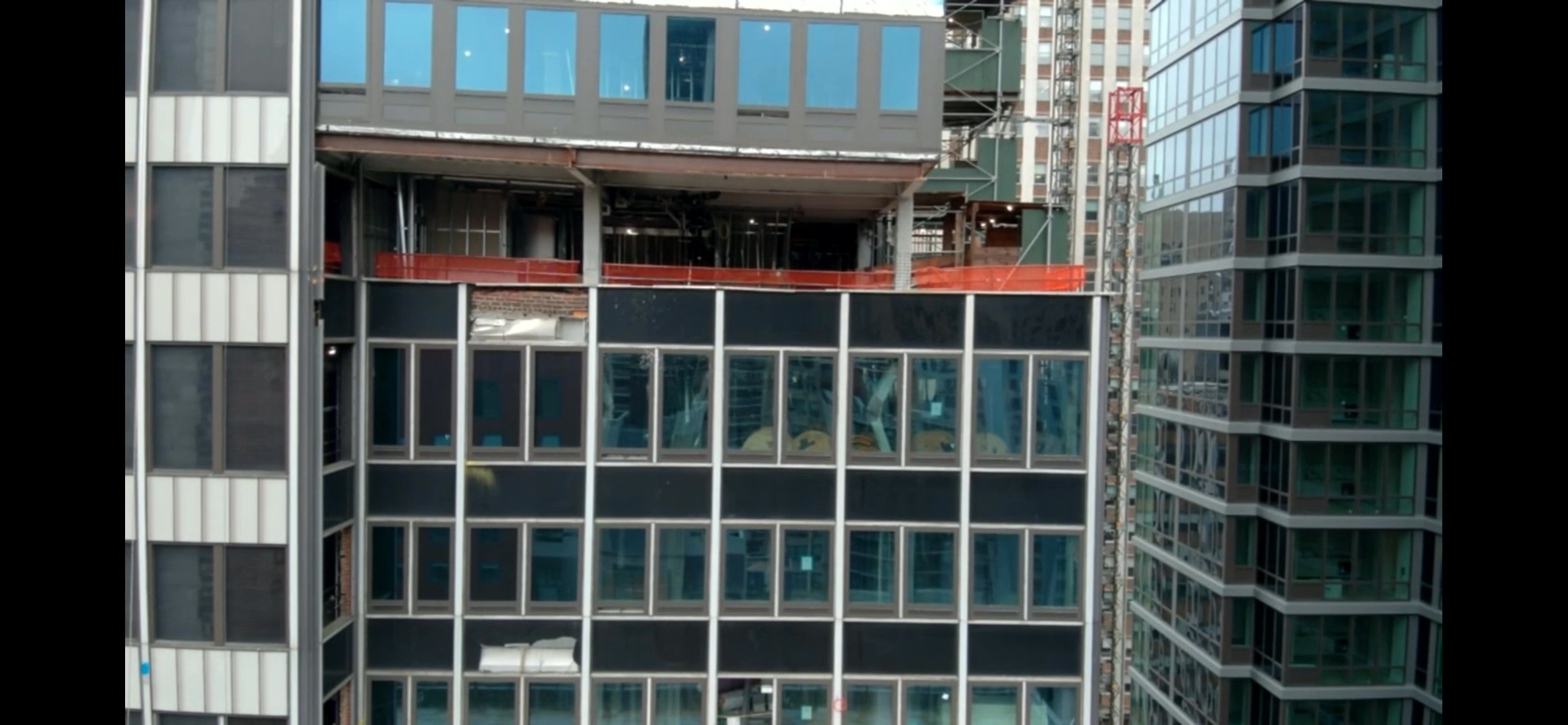
On July 7th, two support columns buckled on the 21st floor of the former Pfizer headquarters in Midtown Manhattan, a 37-story tower being converted into roughly 1,600 apartments. Floors sagged between the 21st and 26th stories. Nine nearby buildings were evacuated. Streets around Grand Central were closed. The city deployed dozens of fire units and well over a hundred personnel. By the next evening, engineers had reached the damaged floor and begun shoring it up.
I don't know the specifics of what went wrong at that particular worksite. At the time of writing several investigations are still undergoing to get to the bottom of what exactly went wrong. But the incident put a spotlight on an issue that has worried me for years. Something that is true across our industry, not just at one site: a knowledge-transfer shortage that is quietly getting worse.
Much has been written about the labor shortage in the trades. Far less has been said about the retirement of the know-how itself: the accumulated judgment that experienced tradespeople carry, and that doesn't automatically transfer to whoever replaces them.
In too many corners of the built environment, critical information lives only in the heads of a handful of veteran staff. It's passed down the way a family recipe is passed down, informally, person to person, generation to generation, with nothing written anywhere. For decades that worked, because there was always a next generation standing by to receive it. But the trades have spent years short on entrants, and that oral-history model breaks down fast when there's no one there to listen. The recipes are still in someone's head. There just aren't enough hands to hand them to.
Demographic surveys of the roughly 22 million blue-collar workers in the U.S. have found that close to 40% are over 55, with a shallow pipeline of younger workers behind them. Every retirement in that group takes more than a person out the door, it takes the ability to spot a warning sign before it becomes a failure, to know how a project actually behaves in the field versus how it looks on paper. That's not a skill you can post a job listing for. It has to be captured somewhere before it walks out.
That gap is what led me to start StringBean almost a decade ago. Our platform exists to be that knowledge base. Every inspection, every vendor interaction, every maintenance note our partners log becomes part of a permanent, searchable record. When an experienced facilities manager retires, the judgment they built up over 20 years doesn't have to retire with them. It's already written down, in a form the next person can actually use.
None of this is a claim about what happened at 235 East 42nd Street specifically. It's a claim about the environment every project like it operates in. There's growing institutional recognition that this is a real economic issue, not just a workforce one. BlackRock recently committed $100 million to help train 50,000 new skilled-trades workers over five years, with CEO Larry Fink noting that capital alone won't solve America's infrastructure needs without the people to execute the work. That's the right instinct. But training new people is only half the problem. The other half is making sure what the outgoing generation knows doesn't evaporate before the incoming one arrives.
There's a real opportunity in this moment, too. As AI reshapes what were once considered the safest white-collar career paths, we're already seeing signs that more young people are looking at the trades differently. Not as a fallback, but as durable, skilled work that machines aren't replacing anytime soon. That's a genuine opening. The labor shortage in the trades could shift. It makes it more important that knowledge is accessible when they arrive.
The lesson from a near-miss like the Pfizer building isn't really about columns, or steel, or one contractor's sequencing decisions. It's a reminder that every day, all over the built environment, small failures in documentation and institutional memory are quietly accumulating. Most resolve before anyone notices, a few become expensive, and occasionally dangerous. Building better systems to capture what our most experienced people know isn't a nice-to-have. It's how we make sure the next near-miss stays a near-miss.
Photo credit: FDNY